The Paradox of War by Skid Crease, first published in 2020
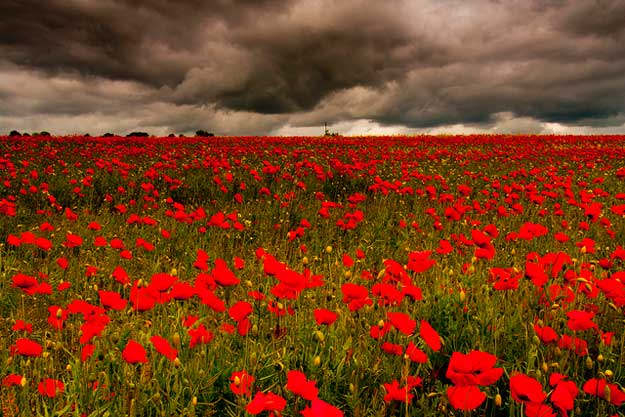 In memory of Harry Sydney Crease 1914 – 1990; Flight Lieutenant, RCAF/RAF 1939-1945, RCAF sic itur ad astra, RAF per ardua ad astra … to the stars, Dad.
We are taught as children to be patriotic, to defend our flag and our values and our culture against “them” … the others who may have flags and values and cultures different from ours. My father was one such young man, born in 1914, who sat around the radio with his family listening to broadcasts every evening covering the horrors of World War One. He went to bed with nightmares of Sturmpanzerwagen tanks rolling down the streets of Windsor.
He joined the Windsor Flying Club, got his pilot’s licence, and when World War Two called for patriotic young men to defend the flag and fight for our culture, he enlisted in the Air Force. He trained in Ontario and Quebec before being shipped off to England for final training with the RAF to become a Hawker Hurricane fighter pilot.
On October 13, 1941, on his 13th mission, at 1300 hours, my father was shot down over Lilliers, France. The farmer who rescued him buried his parachute and hid him in his barn. When it was safe, he was brought into the house where the farmer’s wife fed him cautiously. After the meal the farmer said, “In the morning, I will walk you to where we can meet a member of the Resistance, but if I am stopped by the Germans, I will have to say I was coming to turn you over to the Luftwaffe.”
The next morning as they walked through the German tank trenches, they were stopped, fortunately by a group of German pilots who recognized that my father was a Flight Lieutenant. In the strange rule of war, there is honour among the elite warriors and they gave him the preferential treatment due an officer.
My father was taken to a nearby French aerodrome that had been taken over by the German Air Command for their pilots. The Luftwaffe controlled the skies over Europe at that point in the war and were feeling supremely confident. He was escorted to their mess hall wondering when his interrogation would begin. He had been trained to only give his name, rank, and service number if captured by the enemy.
Instead, there were no such formalities. A young pilot simply invited him to sit down to dinner. When he arrived at the banquet table, all of the Luftwaffe pilots stood and gave him the full RAF salute, then seated him with their officers. He was in shock.
When dinner was served, they rose again and toasted him, and invited him to join in a feast of the boar they had just killed. He was too much in sock to eat, but he remembered the smell of that roast pork during his almost four years of Stalag Luft 3 when food was scarce.
After dinner, all of the young German pilots peppered him with questions : “Does everyone in Canada canoe?” “Do you all play hockey?” “Are the winters really so full of snow?” For them, Canada was a mythical land of coureur de bois, voyageurs, and epic wilderness. They talked all night.
The next morning an army truck arrived to take him to the first of a series of POW camps. All the young German pilots came and saluted him again before the truck pulled away.
It was the memory of that experience that helped him survive the next four years as a POW. “You see, Son,” he said, “if we had met under any other circumstances, we would just have been a bunch of young men wanting to know more about each other’s lives, sharing stories about the best things we loved about our countries. We could have even become the best of friends. That is what a war does to people – it destroys the humanity of nations.”
Let us remember with equal honour all those who sacrificed their lives in the name of their country’s flag – and never again tell our children the great lie: “Dulce et decorum est pro patria mori” – How good and glorious it is to die for your country.
It is the time, to remember more than ever, the good that beats in the hearts of the best of us. The way I see it.
Skid Crease, Caledon
*****
Image credit, University of Toronto