Regressive OAS Legislation in Federal Budget

Share this post:

 “Raising the age of eligibility for OAS is regressive legislation.”

 Dear Editor:

In response to the letter by Joseph Di Federico, Bolton, ‘Enterprise’

 Mr. Federico was looking for the right facts in all the wrong places when he challenged Scott Brison’s comments on Old Age Security.  Conservative think-tanks and organizations may not be the best place to check out economic facts that expose the current government’s ideology.  But, concerned about my hard-working tax-paying children’s right to get their benefits at 65, I thought it would be wise to go to a reliable source to get the facts on the future of Old Age Security in Canada.

 Enter Robert L. Brown, past president and fellow of the Canadian Institute of Actuaries, who just happened to pen an excellent article for the Globe and Mail titled, “Debate the OAS on facts.”  It turns out that the Chief Actuary of the OAS system reports regularly and publicly on the system’s financial health.  According to the Chief Actuary, we do not need to worry about the sustainability of our Old Age Security.

 Yes, the costs (including the Guaranteed Income Supplement) will rise from $37 billion today to $108 billion by 2030, but Brown reveals that these figures are “meaningless on their own.”  He draws on a number of factors including the fact that the OAS is taxable, that it is clawed back according to income, and that the number of recipients will fall drastically by 2030. For every Canadian aged 65+ in 2007, there were 4.7 Canadians aged 20 to 64.  By 2030, that ratio drops to 2.4, almost half the demand on the OAS.

 In addition to the economic facts, Brown also provides the example of the impact on a worker who retires at 65 and could easily live for another ten years.  If you raise the age of eligibility for OAS from 65 to 67 you remove 20 percent of that person’s expected benefits.” Brown concludes, “Raising the age of eligibility for OAS is regressive legislation.”

 We should also consider these facts in light of the recent report by the Canadian Parliamentary Budget Officer, Kevin Page. He revised his original concerns about the OAS after the Conservative Government quietly broke a promise and announced on December 19, 2011 that it would no longer be transferring the annual 6% increase in Canada Health Transfers to the provinces.  Page recalculated that the increased revenue not only makes the OAS sustainable, but will provide enough cash flow versus payments to allow for enrichment of these programs.

 Mr. Di Federico, thanks for alerting us to seek out the facts.  Now, if every person aged 18 to 63 writes a letter to the Minister of Finance, the Prime Minister, and our local MP, they might be better informed.  And at the next federal election, let them know how you will feel about losing 20 percent of your OAS retirement benefits.

 Skid Crease, Caledon

Voter Suppression IS a Scandal

Share this post:

 Voter Suppression IS a Scandal

Letter to the Editor:

Responding to Claire Hoy’s Thursday, March 8, 2011 article: Robocall: not a real scandal

 Mr. Hoy, staunch Conservation defender, is doing a great disservice to democracy by trying to reduce the significance of the Robocall and vote suppression scandal.  A tactic described by Harper advisor Guy Giorno as a “despicable, reprehensible practice” certainly sounds like a scandal worth being taken seriously by intelligent voters.

 However, it turns out Mr. Giorno knows a thing or two about dumbing down an intelligent population. His attitude while manipulating Ontario’s curriculum devolution in the 1990’s was: It’s not our job to nurture critical thinkers, it’s our job to train productive consumers. Ten years later, reflecting on the impact of the change and conflict those decisions imposed on students, Giorno remarked, in a rare moment of empathy, “That’s unfortunate.”

 This is not the first time in history an intelligent society has been corrupted, and a democratically elected government has become a dictatorship.  We only have to look back to 1933 in Europe, on “the Night of the Long Knives” when opposition parties were banned, the intelligentsia were suppressed, labour unions were abolished, and a secret police state was established.  Using a Ministry of Propaganda repeating the mantra, using the country’s economic crisis as justification, and financially supported by wealthy industrialists eager to break the worker’s unions, one of the most despicable, reprehensible regimes in history was born.

 With most of our national newspapers and news channels being to the political right of centre, and a strictly controlled script from “our government”, the Canadian public is being numbed and dumbed to accept the first sound bite issued, and never really encouraged to look deeply into the issues facing us.  We end up getting the government we deserve, for better or worse.

 A free and uncompromised vote is the cornerstone of our democratic society, and I take that very seriously, Mr. Hoy.


Skid Crease, Caledon

Website Officially Opens Earth Day 2012

Share this post:

 Greeting to all of those who have waited so patiently for this website to become active.  I had to wait for the perfect storm of political stupidity, enviornmental degradation, and personal health to speak to the world once again.  The time is now.

When I launched Global Perspectives: the Periwinkle Project back in 1989, the objective was to challenge educators to create and deliver a relevant curriculum for the 21st century that would empower students to become environmentally literate, globally responsible, actively participating members of society.  That challenge now extends beyond the formal schooling system to all areas and all levels of our society.

Today we begin the battle to take back our country and our planet, and we will do it with respect and wisdom and perseverance.  We will hold "The Art of War" in one hand, and the lyrics to "Where do the Children Play" in the other.  And we will never give up.

As the day goes on, this site will fill with stories, articles, and events postings, so stay tuned and spread the word.

I dedicate this official launch, as I did the original Periwinkle Project,

to my father, who taught me that the price of freedom is eternal vigilance,

and to my children who taught me that you can only share another’s heart through the giving of your own.


Website update

Share this post:

iceberg

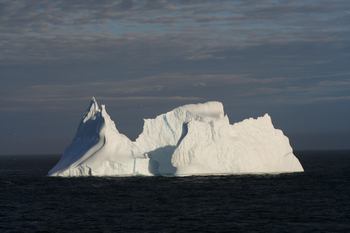
Website officially opens Earth Day 2012 – the polar bear and the iceberg in my photos are from our Students on Ice Expedition to the Arctic in 2005. Unforgettable bearing witness to the impact of climate change.


On the value of experience…

Share this post:
Working at the Mono Cliffs Outdoor Education Centre was one of the most wonderful experiences of my life. The spectacular landscape of the Niagara Escarpment and the ancient Violet Hill Spillway was our classroom across the rythyms of four seasons, and every group that came to the Centre was enriched by their experience.
 
Yet in all the wonderful memories of global conferences and student environmental leadership forums and a myriad of exciting programs developed for both school children and adult professional development, two experiences stand out in my mind.
 
The first was with a Grade Five class from North York School Board. We had just finished their check-in procedures and lunch, and were getting ready to take them on an orientation tour of Mono Cliffs Provincial Park. Now, it was always my style to check out the live wires in the group, the characters, the ones who looked like they might be living just a little close to the edge in their classroom behaviour and win them over. So at the beginning of the hike, I picked one perfect candidate and said, “Mark, you are going to lead the first leg of the hike.”
 
His eyes widened and he smiled, but his teacher grabbed me by the arm and said, “You’re going to let Mark lead the hike?” in an incredulous and somewhat fearful voice. 
 
“Oh, yes,” I replied with a smile, and turning to Mark I said, “You are going to lead the group down this trail until you come to the first fork in the trail. Don’t let anyone go past you on the hike, warn people behind you about any tripping dangers, and keep the group together at the trail intersection. Got it?” “Yes, sir, Skid!” he replied and off he went into the forest with the class behind him.
 
I physically had to hold the teacher back at the end of the line. She was frantic that her class was following a student she obviously didn’t hold high on the leadership totem. I kept slowing her down, pointing out wildflowers and sharing nature stories until the class was out of site down the trail. At one point she looked up and realized she couldn’t see a single student and literally went white. “There are cliffs near here, aren’t there?” she asked.
 
“Yep,” I said, “Eighty to a hundred feet high – beautiful views from the edge – we should be there soon.” She took off at a run down the trail. But as we turned the corner, there was the class, neatly lined up behind Mark who stood, arms crossed looking cool, at the fork in the trail. She stopped, amazed. I walked right up to Mark, said, “Well done. Now, you take on the job of sweep with me, last person on the trail, making sure that you gather everyone up and no one falls behind. Who wants to be the next leader?” Hands shot up like bridesmaids reaching for the bouquet, but I picked Cynthia, the quiet little red-haired girl who hadn’t put up her hand at all. “Thanks for volunteering, Cynthia,” I said, “Same rules, gather the group up at the next fork in the trail.” And off she went.
 
Mark and I walked silently together at the end of the pack. He kept looking up at me, and finally grabbed my hand. I stopped and looked at him and smiled and said, “What?” He had this wondrous look of joy on his face, and he looked up at me with the biggest smile ever and said, “Wow, thank you!” “For what,” I replied. He smiled, “That’s the first time in my life a teacher actually let me do something real.”
 
Perhaps it was working in the idyllic setting of Mono Cliffs that had made me think exposing children to experiential education was the norm. Mark suddenly made me realize how many children sit inside four walls, staring at the symbols of their real world on the printed pages of a book, on plastic desks, under artificial lights, while the greatest classroom of all sits just outside the door. Six years in school, and this was the first time a teacher had let a student do something real
 
And as teachers we do this for 190 days a year, for six hours a day, from age 5 to 17, and on their eighteenth birthday we hand them the steering wheel and say, “Good luck. Good luck finding a job, finding a partner in life, taking care of yourself and your community. I know, we kept you in the passenger seat and you never really got to drive the car while you were in school, but Good Luck!”
 
That incident reminded me of a wonderful book of poems I received in my first year of teaching. It was by Albert Cullum, titled, “The Geranium on the Windowsill Just Died, But Teacher, You Went Right On.” The most poignant poem is from a student having trouble succeeding at school, and he looks across the classroom from his rainbow filled sky to his teacher sitting with his head stuck in an ancient map of the world, (later I noticed the child’s folded hands had the middle finger stuck up) and he says,
 
“I was good at everything
          honest, everything! –
until I started being here with you.
I was good at laughing,
Playing dead,
Being king!
Yeah, I was good at everything!
But now I’m only good at everything
On Saturdays and Sundays…”
 
 
Good luck, Mark.