Our Earth Hour – too little, too late.

Share this post:

March 28, 2026 marks the 20th Anniversary of Earth Hour. There are 8760 hours in a year, so one hour for our Earth doesn’t seem too much to ask. My Town of Caledon, Ontario, is generating a lot of media releases about our Earth Hour celebrations this year, with “Environmental Pledges” and community gatherings to celebrate our environmental literacy on this one hour out of eight thousand seven hundred sixty.

That’s a commitment of 1:8760 hours … ah, not quite enough to turn the tide.

To be clear, those pledges made in that brief hour in March are intended to be turned into action for Earth Day on April 22.  And those actions on that one single day out of 364.25 days are intended to become an integral part of our lifestyle for the rest of the year.

Sadly, for many, that March Hour is all that Earth gets. Seems like it was too much to celebrate a whole Earth Day.  I mean, really, a whole day? Twenty four hours for our Earth? Who has time for that these days? And a whole year? Inconceivable!

The first Earth Hour was initiated by the World Wildlife Federation in Sydney, Australia in 2007. After 36 years of Earth Day celebrations it seemed like the human attention span was fading and it was harder to draw a crowd for photo ops. But an hour? Hey, almost any over consuming society should be able to come out for an hour!  It also honoured the origins of the very first Earth Day proposed in 1969 by American peace activist John McConnell to take place on the Vernal Equinox in March.

That idea was completed in 1969 by Senator Gaylord Nelson. Interestingly, Senator Nelson had accompanied President John Fitzgerald Kennedy on his famous 5 day “Conservation Tour” in 1963. Kennedy planted a seed that grew in Nelson. That torch was passed to Harvard graduate student Denis Hayes  which led to Earth Day 1970.

I remember the first Earth Day very well. It was my second year of teaching in 1970 and my Grade Five class spent the day cleaning up the local green spaces around our school. My classes celebrated Earth Day every day from then until the day I retired from classroom teaching. And I celebrated it every day, and continue to the present. Why?

From the WMO and the UN March 23/26: The World Meteorological Organization – Earth’s energy imbalance (the planet is holding more heat than it can release) is the highest in sixty-five years of record keeping, and 2015 to 2025 have been the eleven hottest years recorded since modern weather records started in 1850.

Antonio Guterres, Director General of the UN stated “Planet Earth is being pushed beyond its limits. Every key climate indicator is flashing red.”

That’s why. The science is clear. We’re either all in, or we’re out. The way I see it.
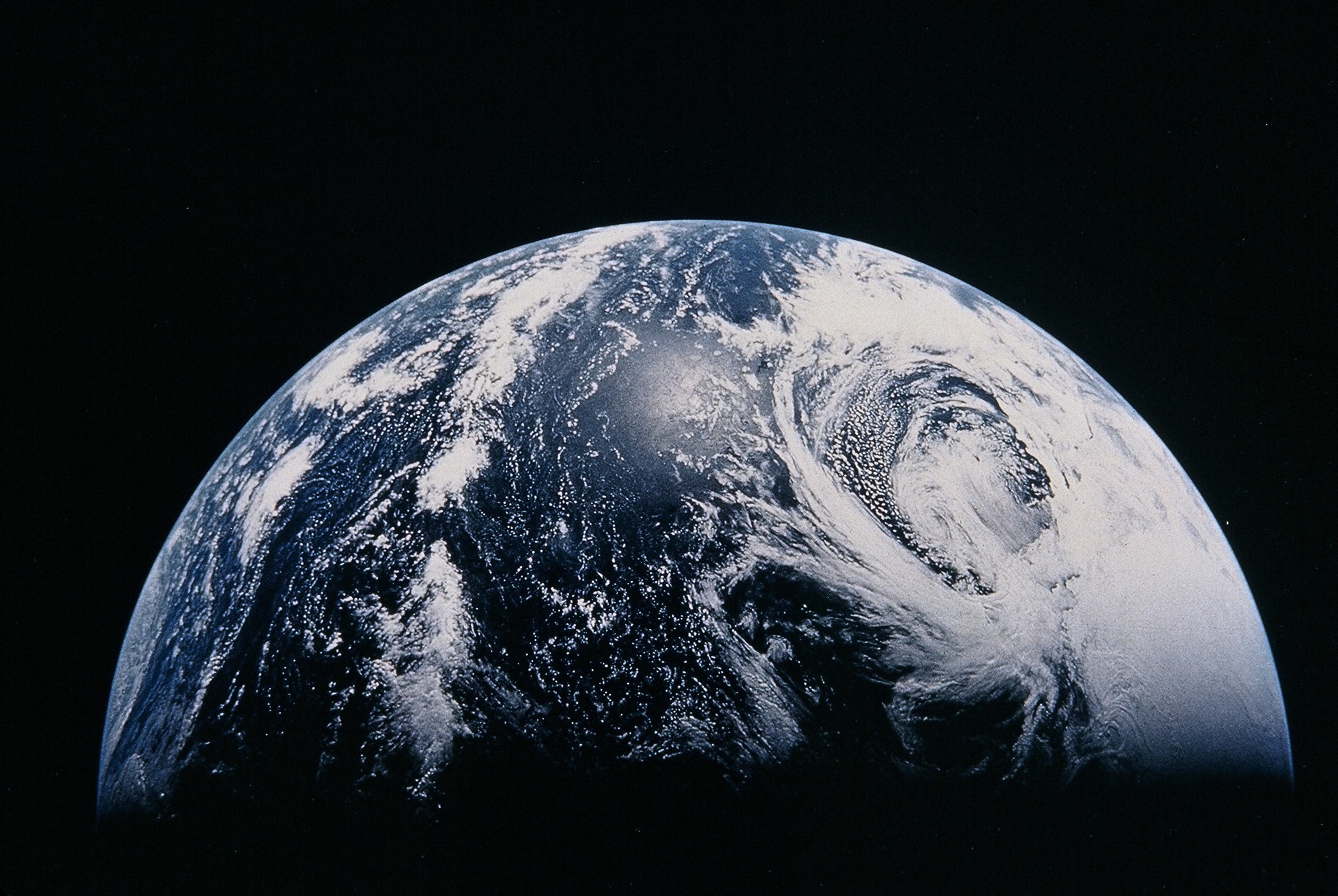
Earth Day, April 22, 2021

Share this post:

 This Monday I had the great pleasure of being interviewed by Patricia Ogura for the Retired Teachers of Ontario organization. Her brief article is about the quest for environmental literacy and the contribution that the retired educational “elders” can make for our communities and our planet. We spoke about my years of advocacy, and reflected on the need to keep this Earth Day message positive. The truth is, we’re all going to die.

I reflected back to my first Earth Day walk with my students in 1970. How much has changed in fifty-one years? Turns out, not a lot. The most significant impact for environmental improvement has been the arrival of a deadly virus that dramatically slowed manufacturing and transportation pollution. The COVID-19 pandemic also reduced air travel and ocean travel – atmospheric air quality improvement and whale population resurgence followed in the wake of human inactivity.

Fifty-one years later we are still talking about boomerang lunches and taking our own reusable mugs and shopping bags as if we had just discovered these personal actions. A TV show this morning showed children happily making art from recycling box items. Makes us feel personally good for one day, and then it’s back to the shopping mall to buy more “stuff” that will end up in  the recycling box or garage can.

Dear readers, think of this like the solutions for stopping the pandemic. You stop the opportunities for person-to-person transmission: mask, distance, wash hands, and keep to small family/personal bubbles. Period. The vaccines will only work if all those basic steps are followed. Do we want to save humanity and leave a healthy biosphere on the planet? Then humans need to stop consuming the planet’s resources like we have an additional six planets waiting in reserve. There is no vaccine for human stupidity.

Before it was disbanded by Stephen Harper, Canada had a wonderful Science Council made up of real practicing, published and peer reviewed scientists. They advocated for turning Canada from a Consumer to a Conserver Society. That is anathema to the Conservative mindset. Just recently the Conservative Party of Canada voted at their policy Convention NOT to acknowledge the reality of Climate Change. That is how far we have come in fifty years. One step forward, two steps back.

Wonderful groups from Students on Ice to Ontario Nature try their best to educate a concerned and passionate youth about using their voices to inspire change in their communities. In 1990, we had teen Severn Suzuki shaming adults on the world stage at Rio. In 2005, the Students on Ice delegation was included in the Montreal Biodiversity Convention – that UN agreement was shredded a year later by Stephen Harper. In 2020 we had teen Greta Thunberg shaming adults during her global protest tour. Good work children! Pat on the head and back to big business.

My conversation with Patricia was honest. We do these personal role modelling efforts – walk, cycle, electric car, reusable materials, sustainable renewable energy sources, doing business with ethical companies, living elegantly with less, so that we can look our children and our neighbours’ children in the eye and say, “I tried my best.”

In the meantime, in business and politics, the Economy trumps Ecology every time … until there is an overshoot and biological collapse of some major Earth system. That’s when the punch that was predicted thirty-one years ago by the World Meteorological Organization hits us right in the face: “Humankind is conducting an unintended, uncontrolled, all-pervasive experiment on the atmosphere of Earth, the consequences of which will be second only to global nuclear war.” Unanimous concluding statement from WMO, Toronto, 1988

Happy Earth Day 2021. I’m taking my dog for a walk and smiling, behind my mask, at my good neighbours.

The way I see it.

***

Skid Crease, Caledon

Earth Day 2020, from a window

Share this post:

To paraphrase T.S. Eliot, “This is the way Earth recovers, not with a bang, but a whimper.”

When Eliot wrote The Wasteland in 1922, he probably didn’t have a future global coronavirus pandemic in mind. More like the wasteland created by the horrors of World War One and the “Spanish Flu” as it was called then. This virulent H1N1 swine flu virus actually spread from Austria and France to Spain in 1918 and then was carried home by returning WW1 soldiers. By 1922 it had indeed produced a wasteland, infecting over one third of the world’s human population and resulting in at least 50 million deaths.

Today, the world’s pre-pandemic human population sits at over 8 billion very consumptive, fossil fuel based creatures. COVID-19 has put the brakes on that consumption. It is very fitting therefore, that Earth Day 2020 be celebrated quietly, with no human crowds gathering in the streets or parks or schoolyards for the usual symbolic one-day reprieve of our relentless assault on Earth’s systems.

Since 1970, throngs of well-wishing people have gathered around the globe for one day of green Kumbaya singsongs and tree plantings, and the very next day go right back to consuming as if we had six planet Earths in reserve. Not this year. This year, Earth gets a reprieve. An Earth day with no humans trampling down the delicate spring rebirth. This year a real Earth Day.

For us watching from the windows, there is quiet. Fewer cars in the streets, fewer trucks on the roads, less polluted air to breathe. Far away in Italy, overcome with pandemic deaths on the one hand, the canals of Venice are running clean for the first time in decades. As millions of birds begin their spring migration back to honeymoon haven in the north, fewer Fatal Light Attraction deaths are being reported as office towers sit black at night. (It’s NOT the windmills Mr. Ford.)

This Earth Day is different. We sit inside and have family meals, play board games, tell tall tales. If we venture quietly outside it may be to marvel at the new spring flowers slowly appearing. or to listen to the birdsong, to plant a few seeds in our backyard planter box, to say thank you to the trees in the local park for refreshing our air and climate. Perhaps we walk with family members, or a few friends (five or less, all six feet apart) and wave at neighbours watching from their windows.

Here in Caledon it is cold and sunny on this Earth Day, and quiet. It gives us a chance to listen to Earth song, perhaps like the great Eastern seaboard blackout of 2003 gave us a chance to star gaze in awe as the Milky Way swept across the sky. Now in 2020, with the fossil fuel motors of industry and transportation reduced to a whimper, perhaps now we can listen again.

Perhaps here in the beauty of King and Caledon it is easier for us to listen. It is much more difficult in crowded cities around the world and in rural areas steeped in famine and poverty. Even in developed cities in North America, the clarion call of individual rights trumpeted by evangelical conservative republicans threatens the silence. A healthy quiet on this Earth Day can only prosper in an environment of respect that honours community responsibilities over individual rights.

When the pandemic has passed we can gather in noisy mobs debating the finer points of Ayn Rand’s philosophy versus the community conscience of a just society, but for now let’s just stay home, stay healthy, and watch from the window.

A wise and wonderful human named Father Thomas Berry once wrote, “For centuries we have been autistic to the voices of the Earth. It is time we once again joined in the grand liturgy of the Universe.”

On this 50th Anniversary of Earth Day, it’s a good time to listen. The way I see it.

***

Skid Crease, Caledon